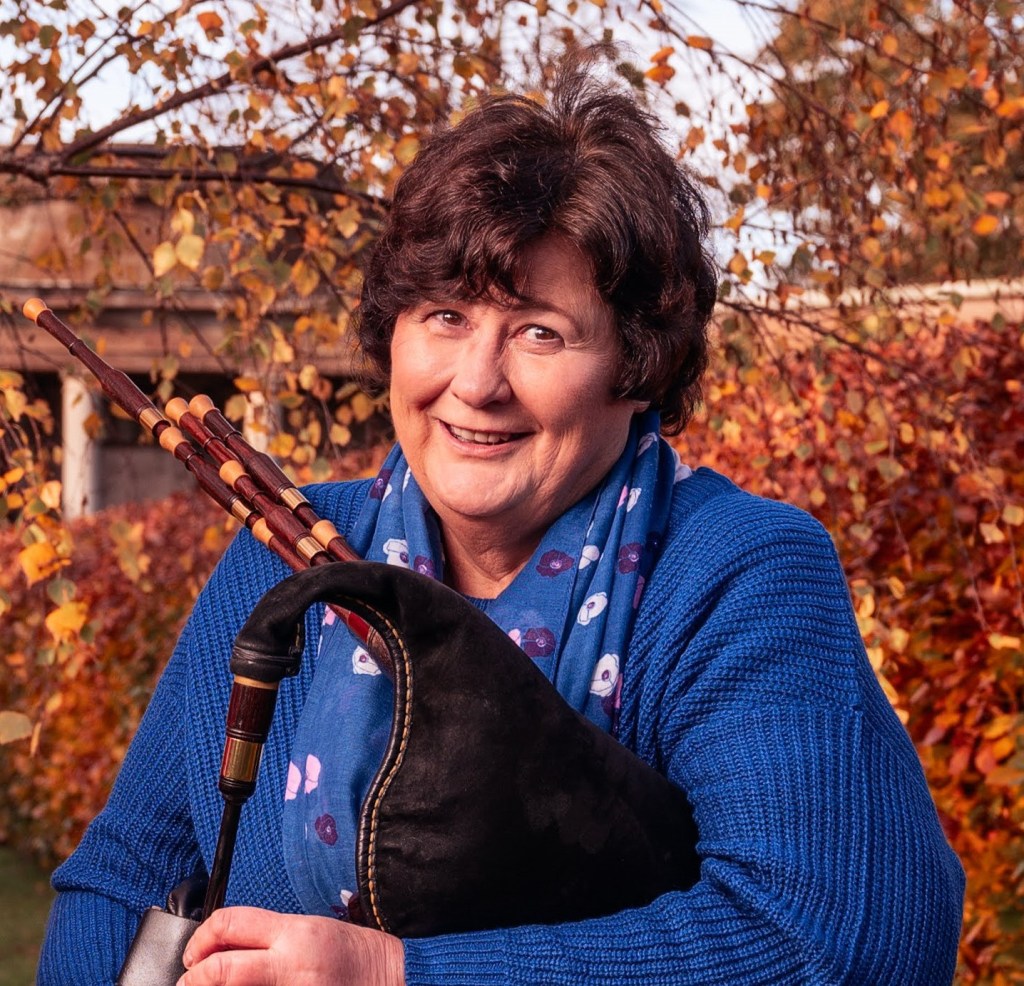
Judy Barker
Judy’s early experience of music started with classical music, as her Dad was an organist and choirmaster and her Mum was a singer. They both encouraged her to sing in the local church choir and learn to play the piano. Judy has loved singing all her life and has sung with a variety of choirs including the Bath Bach Choir during her years as a student in Bath. She still retains a great love of classical music but enjoys all genres of music. When she met her husband Mike in Bath, he introduced her to folk music and she fell in love with its stories, informality and spontaneity. She joined folk band ‘Strings Attached’ (based in Bath) which included a Northumrian Piper who accompanied her on his pipes. Judy very much enjoyed the experience of singing and harmonising with the pipes.
(Read more…)
When Judy and Mike moved to Scotland in 1988 Mike persuaded Judy to consider learning to play the pipes to accompany herself. She initially intended to learn to play the Northumbrian Pipes but was won over by the Scottish Smallpipes as played by Hamish Moore. She loved the flow of this instrument, created with the open chanter, and felt this would be better suited to accompany singing. Judy commissioned a set from Hamish Moore, a fine piper and a well respected bagpipe maker. Hamish designed smallpipes that featured rosewood drones for a more mellow sound and a quieter chanter reed than would normally be used, and Mike bought them for Judy as a birthday present. These pipes are now over 30 years old and have matured beautifully.
Judy’s experience of singing in choirs made it a natural progression to play harmony accompaniments to the songs she sang with the smallpipes, and was surprised to find that this generated a lot of interest as it was unusual at the time in the Scottish tradition of singing with smallpipes. She took part in the Pipe and Song category of the Lowland and Border Pipers’ Society annual competitions over a number of years, with a positive success rate and was recently asked to talk on the topic of “Singing with the Pipes” at the Society’s 40th Anniversary Celebration Collogue.
Judy also enjoys songwriting and finds herself drawing on her values and experiences for her lyrics. Self-penned songs include “Motherless Child” and “The Invalid Regiment”, both of which feature on her album “Chanters Weave” which she recorded in 2008 with Mike’s support and the encouragement of the LBPS. Arrangements for two of the songs on “Chanters Weave” have also been included in a publication by Timothy Cummings entitled “How Can I Keep From Singing?” Judy and Mike joined up with Sally and her husband Chris to form The Nine Tailors Ceilidh Band and our two families became close. After some years, the demands of parenthood led to us calling a halt to playing for ceilidhs, but we formed a folk band called “Welcome the Stranger” and continued to enjoy playing together. Mike tragically and unexpectedly died in 2021, which was devastating for Judy as they had been married for 41 years, but she turned to music for solace, and started playing as a duet with Sally, a new journey that she knew would have delighted Mike. They started playing together simply for the pure enjoyment of playing music, and then wanted to explore the possibilities for the instruments further. Judy once again used songwriting to help her through the difficult times after Mike’s death and she wrote a “letting you go” song in Mike’s memory called “Right for You”, which they perform in his memory during their concerts.
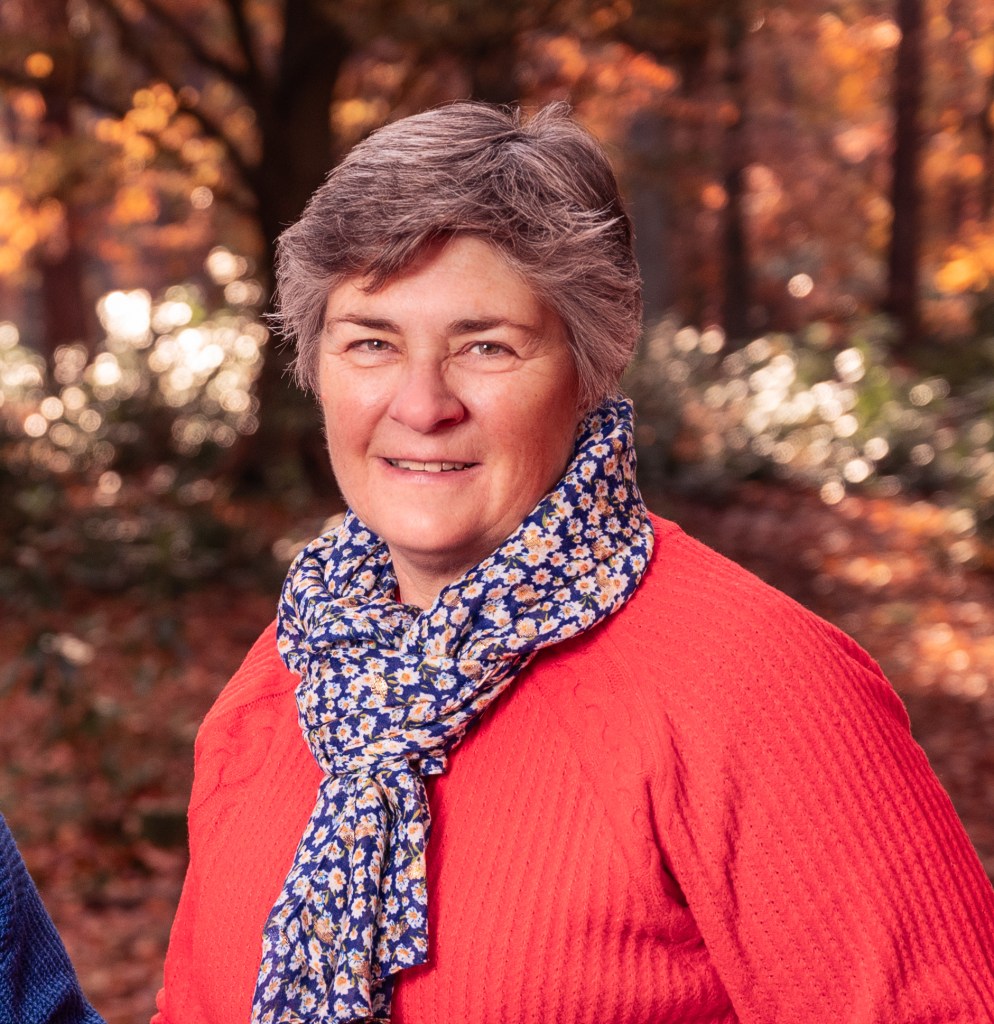
Sally Thomas
Sally grew up in a family surrounded by music. She learned to play the flute while at school and was immersed in the world of classical music for many years, playing in a number of orchestras and ensembles. Moving to Scotland in her late teens she discovered Scottish and Irish traditional music. While continuing to play as a classical flautist, she was also part of a number of folk bands and ensembles in and around Edinburgh, including the Nine Tailors Ceilidh Band and the folk band Welcome the Stranger.
(Read more…)
Seeking new and different musical adventures Sally explored song writing and the English concertina – although not at the same time! The song writing was fun and she was one of the winners of the inaugural Burnsong contemporary songwriting competition. But it was the English concertina which stole her heart and led to a fascination with the joy and delight of English folk music.
As well as her musical partnership with Judy, Sally still plays classical and folk music on the flute, leads the Haddington Fiddles, plays with the folk band Soutra, and is one of the regular musicians for Rag Bag Morris in Northumberland.
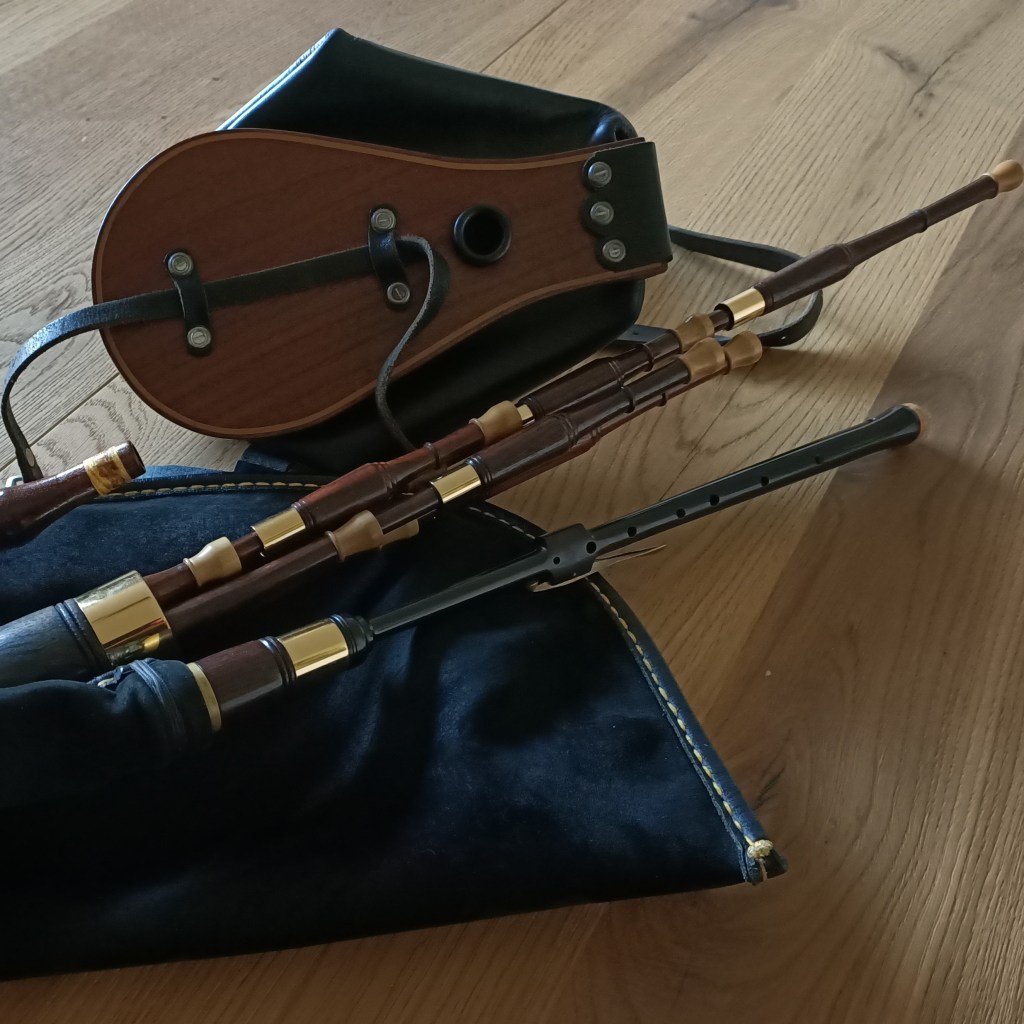
Scottish Smallpipes (made by Hamish Moore)
The Scottish Smallpipes are bellows-blown with their drones issuing from a common stock. They were been played in Scotland since at least the 17th Century. However, in the 19th century the tradition of playing both the instrument and the music fell into disuse, until there were no players of the instrument left to pass on the tradition.
(Read more…)
In 1981 a small group of enthusiasts were keen to revive the instrument and its music. They established the Lowland and Border Pipers’ Society (LBPS). In the early 1980’s there were only two known working sets of Lowland pipes in existence, plus a few sets in museums. Pipe-makers looked to Northumberland for help in making reeds and instruments in the early days of the revival. There are now a number of well-established professional makers producing pipes of the highest quality.
The playing style is similar to the Highland tradition, using the same fingering technique and open-ended chanter as Highland pipes. Today the playing of Smallpipes has become very popular and they are played by numerous pipers and in folk bands.
In 1990 Judy commissioned Hamish Moore (a highly respected pipe-maker based in Dunkeld who was part of the revival) to design a set of Scottish Smallpipes specifically to accompany herself singing. Judy’s pipes are made with Rosewood drones to produce a mellow timbre and a Hardwood chanter with a softer reed than pipers would normally use.
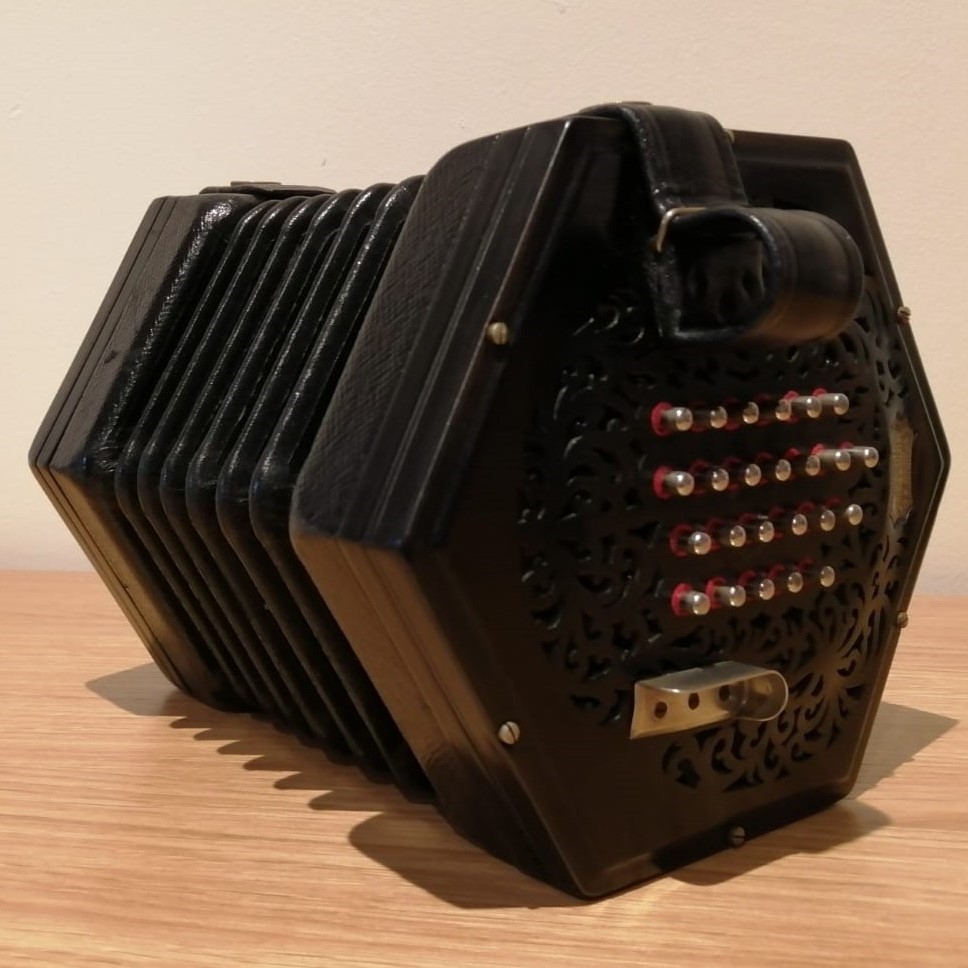
English Concertina (made by Charles Wheatstone)
The English concertina is a member of the concertina ‘family’ of instruments, all of which have free-reeds and are bellows blown. It was invented by Charles Wheatstone who took out his first patent for the instrument in 1829.
(Read more…)
Charles Wheatstone is better known as an eminent physicist and member of the Royal Society. However, he also had a lifelong interest in music, and in musical instruments. The inclusion of ‘English’ in the name of the instrument signifies the type of fingering system used. In the 1820’s and 30’s similar free-reed instruments were being developed in Germany. These German instruments had a different fingering system and were known as ‘Anglo-German’ concertinas (now called Anglo concertinas).
The English concertina is fully chromatic and has the same has the same range as a violin. The buttons are arranged in four rows on each side of the instrument. Each button produces a single note which is same on both the push and pull of the bellows.
The English concertina was originally developed as a classical instrument, although the classical repertoire is seldom played these days. By the 1860’s and 70’s the instrument was used extensively by music hall performers, and by the Salvation Army. The English concertina’s popularity continued into the early 20th Century. But by the 1940’s and 50’s it was beginning to slip into obscurity. Its renaissance came in the 1960’s as part of the English folk revival. It continues to be a popular instrument for folk musicians who value its versatility either as a solo instrument or to accompany song.
There are a small number of English concertina makers today, all of whom make high quality instruments. Many players favour a restored instrument, made either by Wheatstone, or one of the other manufacturers of the 19th and early 20th century. Find out more at the International Concertina Association.
Sally plays a 48-key English treble concertina made by Charles Wheatstone and Company in 1925.
 Judy Barker & Sally Thomas